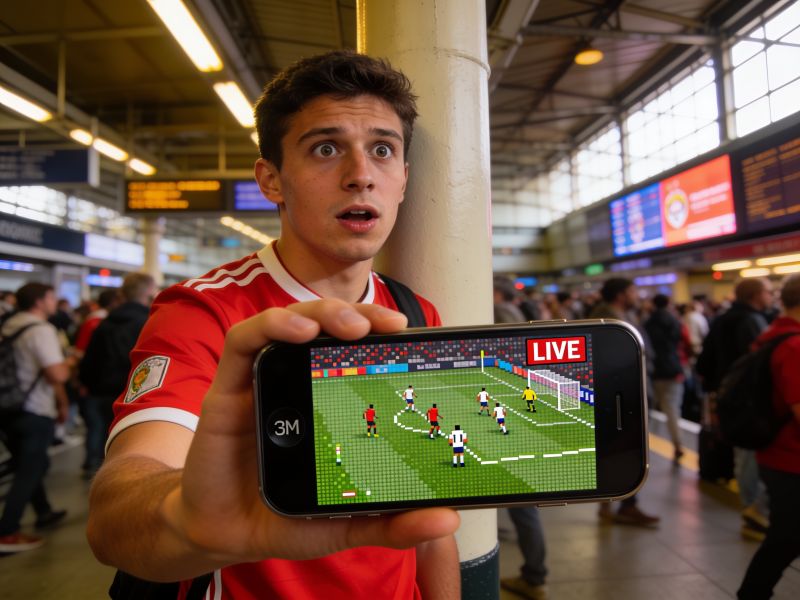
he first time I streamed a football match on a 3G connection, the image froze just as the striker began his run-up. Buffering. Then a pixelated blur. Then the ball was already in the net. That was 2010, and 3G free kick — those free data bundles tied to football promotions — was still a novelty. Yet within two years, that same stuttering feed became the default way millions of fans followed the game. The technology didn’t just deliver video;it rewired how we experience a free kick.Consider the mechanics. A 3G network offers theoretical speeds up to 2 Mbps。enough for low-resolution streaming. Telecom operators in Europe and Asia bundled free kick data plans with matchday passes, and suddenly a fan in a pub queue could watch a replay of a curling 30-yard strike. I remember standing in a Berlin U-Bahn station in 2012, surrounded by commuters huddled over phones, watching a Champions League free kick in grainy 240p. Nobody complained about the lag. The shared anticipation made the 3G free kick feel like a collective ritual.The real shift came in how pundits and coaches used those clips. Before 3G free kick bundles, tactical analysis of set pieces required expensive video editing suites. By 2013, amateur analysts were pulling 3G streams into free apps。annotating runs and wall positioning. I watched a Sunday league manager in Leeds pause a 3G free kick clip to show his defenders how a two-man wall collapsed too early. The resolution was terrible — you could barely see the numbers — but the pattern was clear. That kind of granular, on-demand access to free kick footage had been unthinkable a decade earlier.Not everything improved. The compression artifacts often hid the subtle spin a free kick specialist imparts on the ball. A knuckleball free kick became a smear of pixels. Fans argued online about whether a shot deflected off the wall, because the 3G stream simply couldn’t resolve the deviation. And the data caps — oh, those caps. I once burned through a 500 MB free kick bundle in 90 minutes of a cup tie, then spent the rest of the month rationing email. That tension between access and limitation defined the 3G era.Looking back, 3G free kick was a bridge technology. It proved that fans would trade video quality for immediacy, and that free kick moments — the most rehearsed, most analyzed plays in football — could be consumed in fragments on the move. The 4G and 5G streams that followed fixed the buffering and the blur。
but they inherited the habits 3G created: the phone-first viewing, the pause-and-replay culture, the expectation that a free kick anywhere is instantly available everywhere. Next time you watch a free kick on your phone without a second thought, remember the stuttering 3G days. They weren't pretty, but they changed the game.